FREELANCE · MEINDEIN
Designing a local marketplace for renting anything
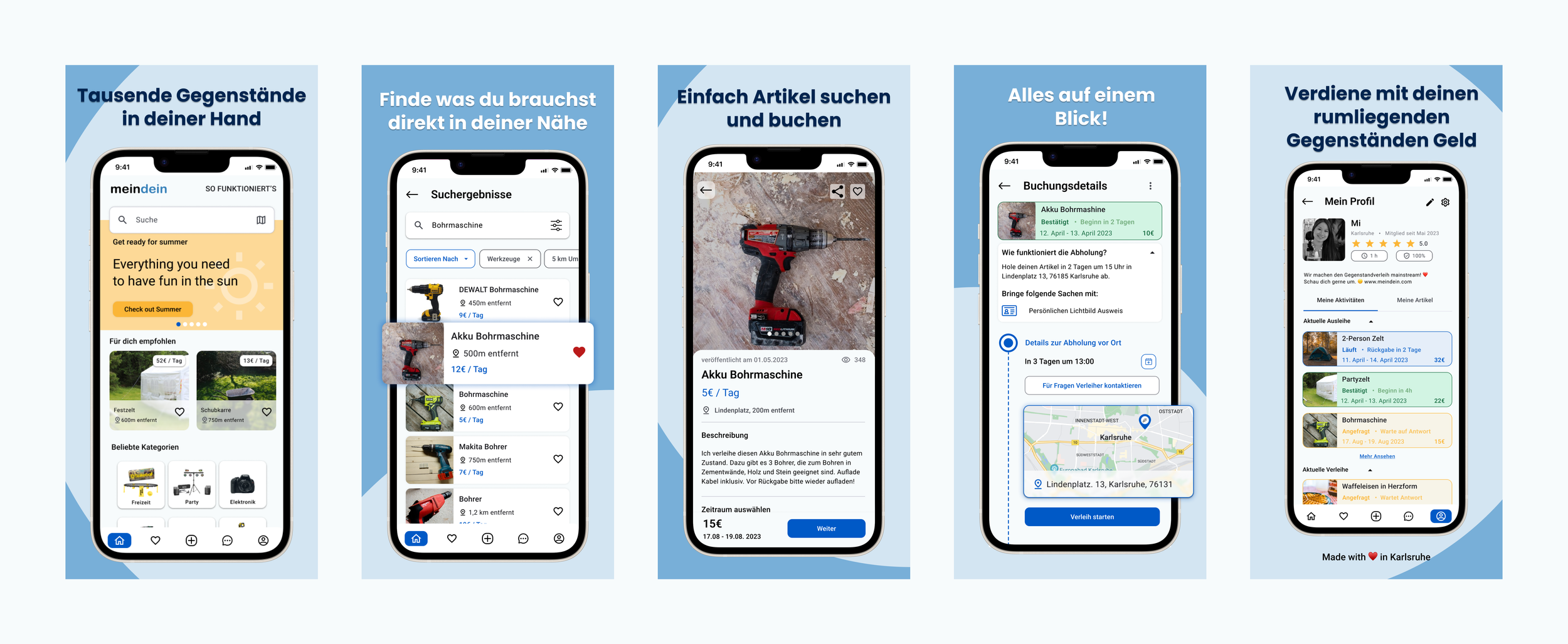
As Lead UX/UI Designer, I designed MeinDein from the ground up - one shared marketplace where private individuals and businesses could rent out everyday items to each other, rather than two separate platforms serving each side alone.
ROLE
Lead UX/UI Designer
TIMELINE
Dec 2022 - Aug 2023
TEAM
UX Designer, Software Engineer
TOOLS
Figma, Considerly, React
01
The context
MeinDein set out to be one marketplace for renting things out - much like Airbnb did for vacation rentals, but for everyday items, and open to both private individuals and businesses. Most existing rental platforms served one side of that market or the other, not both in a single place.
As Lead UX/UI Designer, I owned the design process end to end: starting from the open question of what an app would actually need to make item rentals easy, and working with the team to shape that into a Minimum Viable Product feature set.
02
How I got there
I ran user surveys with people signed up to our interest email list, alongside competitive analyses of direct competitors like Fainin and Peerby and indirect ones like Bauhaus's rental offering. I turned that raw research into personas and mood boards, which became the foundation for the product's design direction and goals.
With multiple MVP features to design for, I built individual user flows for each feature, then coordinated them into one larger flow chart so the features connected into a single coherent product rather than disjointed parts.
From the flows, I designed wireframes and prototypes for each core screen, focused first on layout and the specific function each screen needed to fulfill, then developed those into full mockups.
I tested designs through in-person interviews, a closed alpha launch, and structured Considerly UX testing sessions, then iterated on the designs several times based on what came back.
03
Key decisions
One marketplace for private and business renters, not two
Rather than building separate experiences for private individuals and businesses, I designed MeinDein as a single shared marketplace. It meant reconciling two different sets of needs in one interface, but it meant the platform could build one local sharing community instead of fragmenting it across two products.
Feature-by-feature flows, merged into one
With many MVP features competing for scope, I chose to map each feature as its own user flow before merging them into a single master flow chart, rather than trying to design the whole product at once. It took longer up front, but it kept individual features coherent while I worked out how they connected.
04
Outcome
The research-to-testing process, surveys, competitive analysis, personas, flows, wireframes, a closed alpha, and multiple rounds of Considerly testing, shaped MeinDein into a shipped product. The work was also recognized externally:
05
Reflection
This project taught me as much about project management as it did about design process. Because it touched everything — feature ideation, implementation, and company direction, I was constantly deciding which method fit which stage, and I didn't always get that right. My biggest takeaway: I should have picked a method and followed it through several steps further, instead of switching approaches to try to move faster. In practice, that constant adjustment cost more time than it saved.
Game Design: Foodogeki
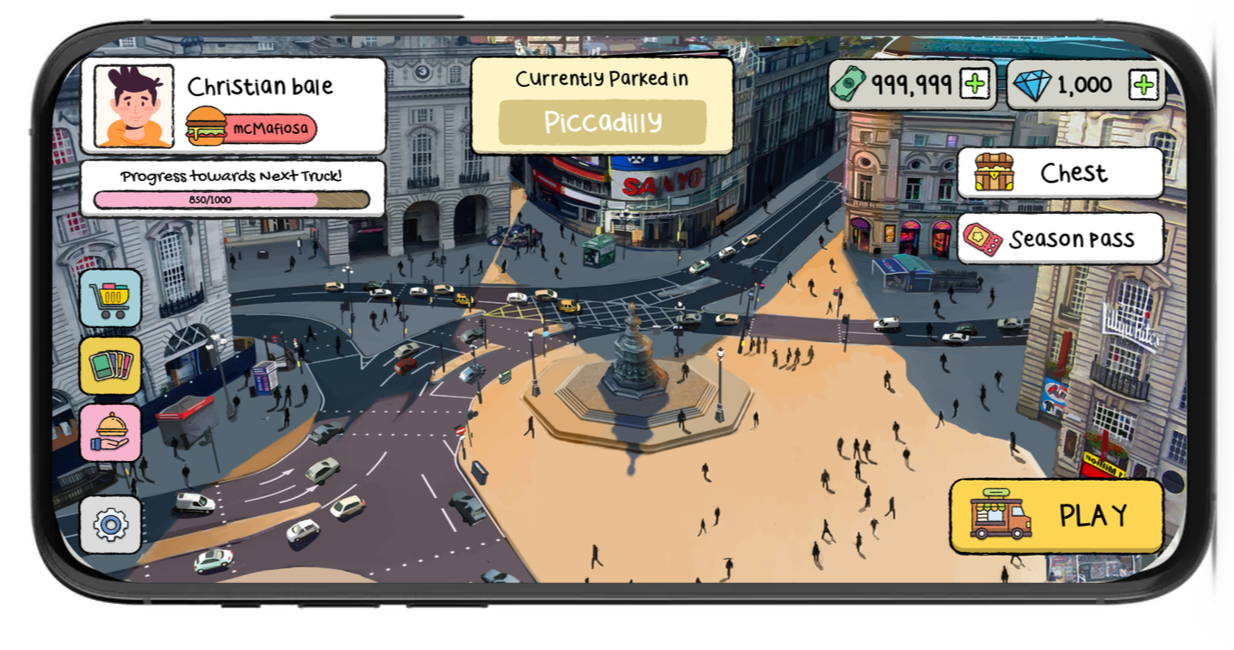
Foodogeki is a mobile game where food trucks and chefs compete to sell food to customers in real time. I designed the user flow and interface layout for every part of the game, deciding where, when, and how each feature should appear so players could stay focused on gameplay.